Bisexual issues
What issues do bisexual people face?
An educational carrd
Terms used to help explain bisexual experiences:
M-spec: identities on the multisexual spectrum
i.e. bisexual, pansexual, omnisexual, polysexual
Monosexual: someone that has attraction to one binary gender
i.e. lesbian, gay, or straight people
sga: same gender attracted/attraction
i.e. lesbian, gay, bisexual, or m-spec people
Note: These terms are to be used to identify specific experiences of bisexuals in comparison to other sexual orientations. These terms are NOT to be used in offensive or inaccurate ways, such as wrongly claiming homosexual people have it easier than bisexuals.
The Stats
Bisexuals face their own issues separate from other sexual orientations and some similar to their lesbian and gay counterparts.
Note: This is to show what bisexuals experience. This does NOT invalidate what others experience.
Note: Use the doc icon if image formatting is off or images are too small.
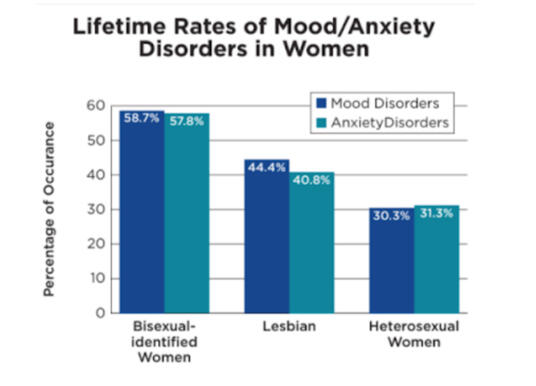
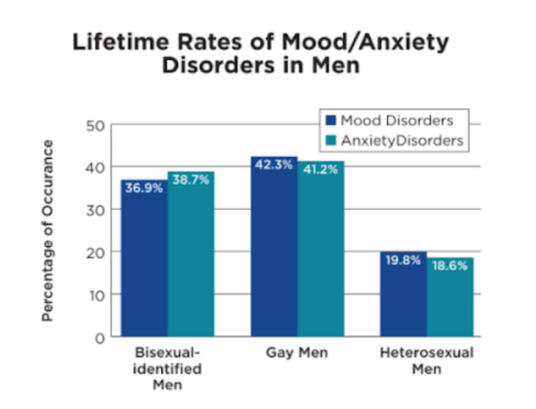
Higher instances of mood & anxiety disorders
Bisexual women have higher instances of mood and anxiety disorders than our monosexual counterparts. Bisexual men have higher rates compared to straight men (APA, 2020).
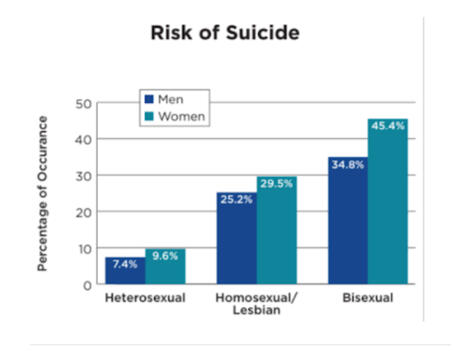
Higher instances of suicidality
Bisexual individuals have a higher risk of suicide compared to our monosexual counterparts (APA, 2020).
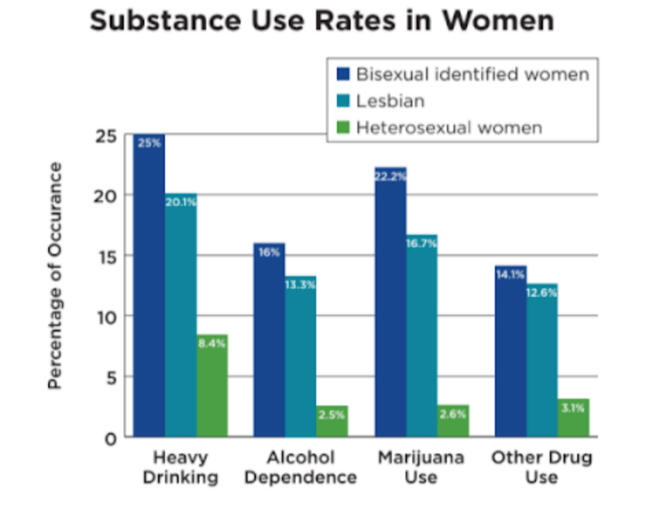
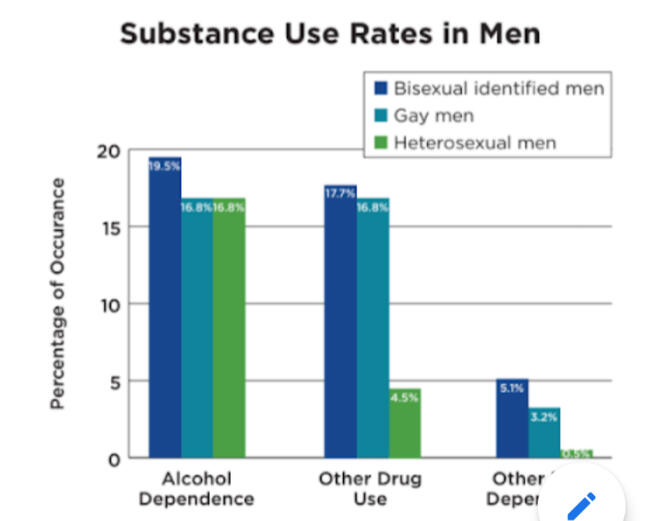
Higher rates of substance abuse
Bisexual people have higher instances of substance abuse than our monosexual (lesbian, gay, and straight) counterparts (APA, 2020).
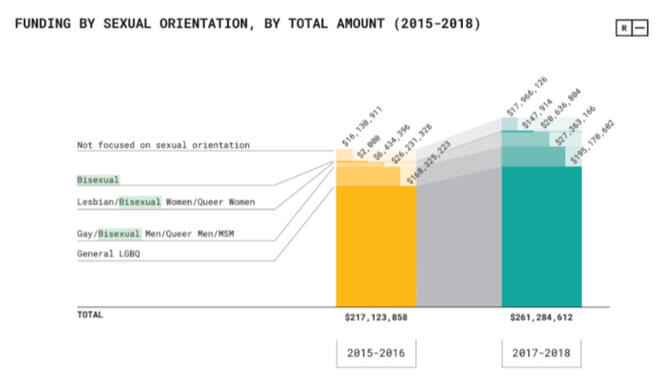
less funding
Bisexuals received less than 1% of funding. Funding did not increase over the next 2 years (Global Philanthropy Project, 2019)..
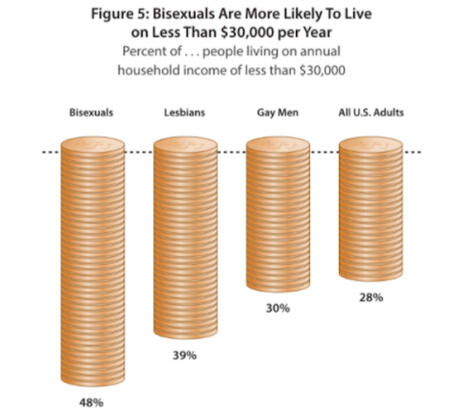
higher poverty
Bisexual people are more likely to live on less than $30,000 (USD) annually compared to our monosexual counterparts (Movement Advancement Project, 2016).
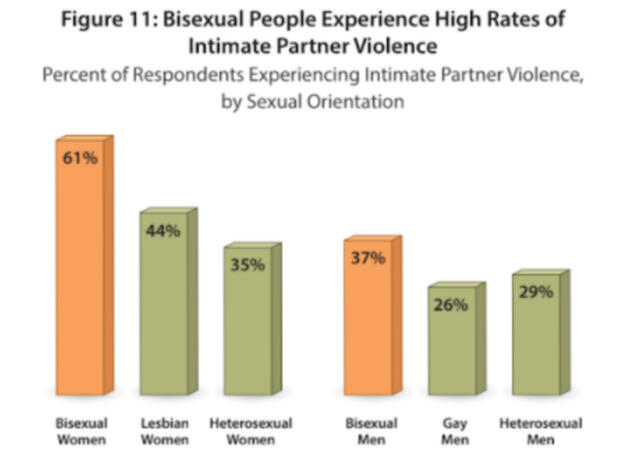
intimate partner violence (IPV)
Bisexual people face higher rates of partner violence than our monosexual counterparts (Movement Advancement Project, 2016).
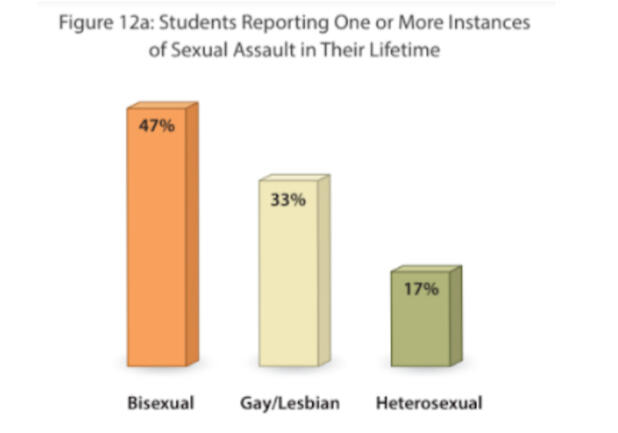
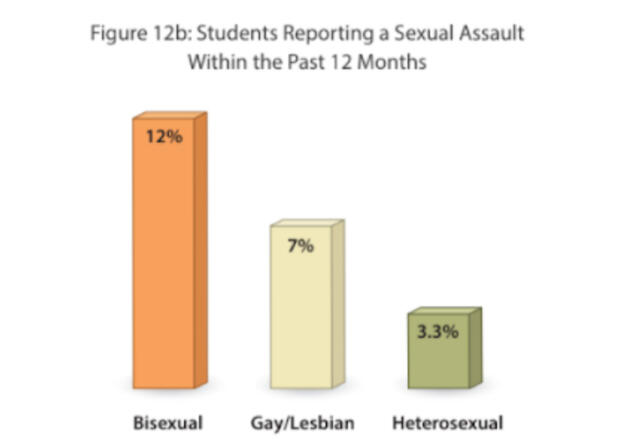
higher instances of sexual assault
Bisexual people are more likely to report being sexually assaulted compared to our monosexual counterparts (Movement Advancement Project, 2016).
American Psychiatric Association. (2020). Mental health facts on bisexual populations. https://www.psychiatry.org/File%20Library/Psychiatrists/Cultural-Competency/Mental-Health-Disparities/Mental-Health-Facts-for-Bisexual-Populations.pdf
Global Philanthropy Project. (2019). Global Resources Report 2017-2018: Government and philanthropic support for lesbian, gay, bisexual, transgender, and intersex communities. https://globalresourcesreport.org/
Movement Advancement Project. (2016). Invisible majority: The disparities facing bisexual people and how to remedy them. https://www.lgbtmap.org/file/invisible-majority.pdf
Important Concepts
Biphobia
The fear, hatred of, or discomfort with bisexuals, sometimes manifesting in discrimination, isolation, harassment, or violence;
Examples: inaccurate stereotypes - including associations with infidelity, promiscuity, and transmission of sexually transmitted diseases.
Homophobia
The fear, hatred of, or discomfort with people who are attracted to members of the same gender sometimes manifesting in discrimination, isolation, harassment, or violence.
Monosexism
The belief that heterosexuality or homosexuality are more legitimate than bisexuality; A prejudice against bisexuality.
Example: someone believes bisexuality is a stepping stone to being homosexual or a phase, which assumes the person is heterosexual.
In other words, it is believing you can not be attracted to more than one gender.
Heteronormativity
The normalization of heterosexuality, marginalizing everything outside the ideals of heterosexuality, monogamy, and gender conformity.
Many bisexuals feel the need to adhere to heteronormativity at times and commonly stay closeted, deny their bisexuality, or ignore same-gender attractions due to the toxicity of learned heteronormativity
Double Discrimination
Experiencing discrimination from both heterosexual and homosexual individuals.
Not only do we usually lack support from outside of the community, we also struggle within the LGBT community for support.
Intersectionality
Approximately 40% of black LGBT youth identify as bisexual (Human Rights Campaign, 2019).
Approximately one-third of transgender individuals identify with a multisexual orientation (Movement Advancement Project, 2017).
It is important to think of many aspects of people's identities in order to have a more accurate picture of their experiences or struggles.
Ex: A white LGBT woman has two identities (woman & LGBT) may highly affect her life. However, a black LGBT woman has three identities that may highly affect her life.
Specific Issues
abuse
violence / assault
homelessness
poverty
mood disorders
anxiety disorders
substance abuse
legal issues (ex: excluded from policies, homophobia/biphobia)
References
Human Rights Campaign. (2019). 2019 black & African American LGBTQ youth report. https://assets2.hrc.org/files/assets/resources/HRC2019BlackandAfricanAmericanLGBTQYouthReport-FINAL-web.pdf?_ga=2.10609969.402155070.1550934675-110772459.1550934675
Movement Advancement Project. (2017). A closer look: Bisexual transgender people. https://www.lgbtmap.org/bisexual-transgender
please use the reference doc to navigate thru the articles!